Tag Archives: stuckists

Asinine Building Blocks of the Demented Coward

Asinine Building Blocks of the Demented Coward

Me a Doll interview. 25th April 2024. Emma Pugmire interviews Me a Doll (aka Edgeworth Johnstone) at Black Ivory Printmaking & Audio Club, London, UK.

MAD: Before we start, Me a Doll’s are heavily influenced by Neo Heart’s The Fembot Oracle.

PUG: And now to start the interview. How do you make the Me a Doll’s?

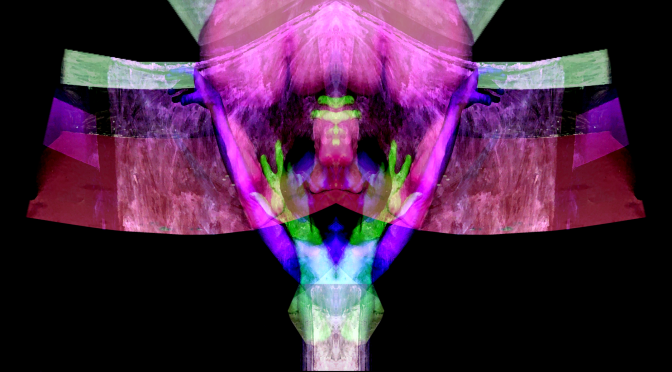
MAD: It’s different to how Neo does it. I don’t know exactly what he does but it involves a photography technique I don’t know much about. My method’s beginners level GIMP, which is like free Photoshop. The source images are stills taken from nude self-portrait dancing like cigarette smoke videos I made in Black Ivory superimposed over each other. There’s way less digital editing than I think it looks. Just 4 or 5 commands repeated however many times, then chopped in half and made vertically symmetrical, I guess like Neo does.

There’s also this varying contrast with horizontal bands, like the stripes on the sides of the Jompiy paintings. 

PUG: What are the contrast bands?

MAD: It’s where I couldn’t get a level that worked for all parts so I divided it up like the Jompiy sides. You have to view Jompiy by slow hand rotations. They’re 3D sculptures. 

PUG: Where do the names ‘Jompiy’ and ‘Me a Doll come from?

MAD: ‘Jompiy’ sounded and looked right. Pure Aesphonly. 

PUG: What about ‘Me a Doll’?

MAD: In the first one I look like a doll. The first of the experimental’s, but I also like it sounding like ‘Me Adult’. It’s said that art’s re-learning what you knew as a kid. Making Me a Doll’s is what a kid might do. You know how ripping people off’s generally seen as a bad thing? Like copyright or stolen valour. And how kids couldn’t care less. It’s me as an adult taking direction from me as a kid, not you as an adult. Kids don’t worry about who did what, they just do what they want and have no problem being honest about it. And can’t understand why anyone else would have a problem with it. They haven’t had the territorial greed educated into them yet.

PUG: You didn’t want to make them different, but loosely inspired by the Fembots?

MAD: I wanted to make them like a kid wants to draw Mickey Mouse. Not their own interpretation. I want to draw Mickey Mouse like Walt Disney did.

PUG: You’ve divided the Me a Doll’s into two categories. The experiments and then the final series. When did you know the experimentation was over?

MAD: After about fifteen that were more like deviations. Then it was back to the carbon copy attempts for the final series. The experimentation was as much getting comfortable with the software as anything else.

PUG: Going from painting figuratively into more abstract and digital art is quite a change in direction. What led to it?

MAD: It’s just the natural tides of what you end up doing, when you don’t do the same thing all the time. Every so often you come across work that makes you sit up and go galloping off somewhere. Fembot led to Me a Doll. With Jompiy it was a co-worker at Wave running an art class on salad spinner spin paintings she saw on Instagram. It’s like being jumped on and having your cataracts torn out. Like when I first heard Nirvana, it wasn’t ‘I really, really like this song. This is my new favourite band.’ It was incomprehension. Going through the Fembot Oracle led to a similar re-evaluation of visual art for me. I had them strewn out over the floor and knew it would lead to something massively different to what I would have guessed I’d be doing next. Then the same again when we started making the salad-spin paintings at Wave. It’s like ‘Shelve everything else. I’m doing this now and for the foreseeable future. Maybe see you in a couple of weeks.’

PUG: Would it be fair to say you’ve moved away from the Stuckist idea that figurative painting is the medium of self-discovery?

MAD: I don’t know about self-discovery. Art can get tied up in stuff like that if people want but my paintings aren’t anything to do with learning more about myself or any psychological therapy, introspection and all that. It’s not about serving society and making the world a better place, or a lot of what’s in the Stuckist manifesto. I couldn’t care less about anything that’s essentially ‘the outside world’. It’s often like painting feels obliged to justify its reason for being and have some sort of use, or provide some sort of service. Art doesn’t need to explain itself or do anything for anyone. I’m not really much of a Stuckist if you’re talking about the manifesto. Probably why I keep writing my own for The Other Muswell Hill Stuckists. I’m not a Stuckist, I’m a The Other Muswell Hill Stuckist. We’re not as similar as you might think. Not you, obviously, but you know.

But about painting and self-discovery whereas conceptual art blocks access to inner worlds, I don’t think it’s true anyway. It’s just a perspective that could just as much be reversed. Stuckism ignores The Theory of Relativity. Not that I know what The Theory of Relativity is but judging by the title, a big Stuckist missed opportunity to have been even funnier, I think. I think things are funnier when they’re true. Especially in art where you’ve got everyone trying to take it all so seriously and put things on a pedestal. Anyone can project what they want onto art, join whatever dots and convince yourself you’ve worked it all out. People do it all the time. Enough make a living out of it, but I find it all just so rubbish and dull to join in with. Pretending you can tell good from bad when it’s all just perspective, your tastes, maybe down to what you had for breakfast. There’s no facts in art.

PUG: For you, it depends on the individual.

MAD: It’s “I don’t like conceptual art. So what?” Dada vs Expressionism, so what? Stuckism vs Conceptual art. The big to-do around Guston going figurative. It’s like green’s my favourite colour, you know. People that like blue are wrong because it’s cold and primary. It lacks the complexity, the emotional intellectual depth of green. Green’s a special blend of primaries working in symbiotic harmony. Relationships, conflict and ultimately, resolution mirroring the human condition, finally at one with itself. Green contains no red because red means danger in nature. It’s a warning suppressed in our feral being, elevating green above both orange and purple. Orange and purple represent conflict and war. Green’s the nirvanay reward for the intrepid artist who dares take risks at the expense of commercial success. All my paintings are green. There’s nothing else in them, just green. Primary colours block access to inner worlds. They’re juvenile, bright and shallow immature sugar-rushes. Asinine building blocks of the demented coward. Would you rather have a house, complete with bathrooms, at least one kitchen and a garage, or a brick? People that like blue lack the sensitivity, vision and understanding people that like green have. They’re lost in a cul-de-sac of idiocy. Actually, brown’s the best colour because it has all the primaries and therefore allows for a more holistic and unfragmented appreciation and range of human experiences. Although, on the down side, it’s the colour of shit. But let’s park that to one side for a moment and take the time to wonder at its splendour. To look inward and discover ourselves through the appreciation of brown. You say “shit”, we say “chocolate”! Ben Shapiro said words to this effect about classical music’s superiority to pop. It’s hysterical because he’s being totally serious. Actually, there was a better one from around the 1950’s on American TV where this bloke was laying out the case for jazz being superior to, and more sophisticated than pop. Suit and tie, short back and sides, looking like a newsreader. He had one of those velvety deep Orson Welles voices that made everything he says sound clever. All his ducks in a row. All logical and water-tight. Sounded great apart from being complete nonsense.

Must have been equally great for Picasso, having an esteemed critic like John Berger telling him his paintings needed themes, and that this is where his recent work had faltered. A fully educated and qualified art critic, no less. Telling Picasso where he’s going wrong with his paintings. A shame Berger couldn’t have painted a few of his own, to show Picasso precisely what he meant.

The problem with words and art is that words are like these big fat clumsy fingers trying to pick up atoms. Like trying to get to a number with fifteen after its decimal point using only five and ten. You can spend all day going round the houses but you’re never going to get there. It’s the wrong tool for the wrong job.

PUG: These rabbit holes you go down with things like the Fembots, they seem to act as a catalyst for your next project. 

MAD: It’s like when I first saw your work, when you pull out these postcards at Stuck in Wood Green, or Luminosity, or reading ‘Monsieur Tourette’ and thinking ‘I’ve got the work for this.’ The Fembots were another example of ‘This is happening like this, with or without anyone else.’ Tuning into the Ron Throop studio and not having a clue what you’re about to see. Fembots have that spirit about them.

PUG: What paint does Jompiy use?

MAD: It’s the cheap tempera they have in schools. The solid parts are Lascaux Artists acrylic. £180 for four tubes but the other stuff didn’t work. Instead of the tempera, I could have got this acrylic and fluid medium but it’s like with expensive oil paint and looking too blingy. Like we were talking about on our weekly Instagram Live broadcast that starts at 8PM GMT every Thursday on account edgeworth.blog, I’m better off with the cheap oil paint. The expensive ones have too much pigment. The opposite being true of acrylic.

PUG: Do you like the accidental? That it’s unplanned and you don’t know what you’re going to get.

MAD: Sometimes, but you never know. If I only properly get involved at a later stage it opens up another load of options because I’m starting off on the wrong foot. With Me a Doll I’m working into an existing form from the start because the beginning phases are pretty much automatic, just with different poses and starting colours. It’s different from a plain white surface then straight into hand eye control.

PUG: So it’s like the starting point sets you off in another direction.

MAD: And then other things stem from those and so on, repeatedly. I’ve always got  these different projects like Aesphonly, Jompiy, Heckel’s Horse Jr., all spawning from different parent activities. The wider you cast all these projects, the wider the scope of what you can get out of it. Me a Dolls, like the masks could be paintings, posters, videos. I’ve started a set of these A4 red carbon paper line drawings from the Me a Doll printouts. One thing leads to several others. Art begets art.

Time feels short when you consider these things and where everything can go. Why I’m so keen to build Black Ivory. I need a hub that relates it all, and us all together. The Emma Pugmire section. There’s Charles and Ron. Ron and I have collaborated his words into my woodcuts. Billy and I collaborate, which connects to Heckel’s Horse Jr.

Charles and I have done a few joint paintings. Me a Doll’s probably as close as you can get to collaboration. You and I are in a band. Rose singing and harmonica, Ron on guitar, then we have a go, then Charles reads his poetry. Ron does another book for which I paint the cover. We record another album in the studio Billy and Huddie record theirs, for which Ron does the cover. It’s this incestuous passive income you get from just being in and amongst other people’s work and the seemingly infinite spin-off’s each individual movement has. Even within Jompiy, each series relates to every other. One has the masking tape from another. One uses excess paint scraped or smudged from another.

PUG: Was that the reason for starting Black Ivory?

MAD: At first, I didn’t envision Black Ivory being anything beyond a print club. But it started looking like a brand that finally relates to what I do and suits what goes on here. The Stuckists are anti-anti-art. The Other Muswell Hill Stuckists are indifferent-anti-art. Heckel’s Horse is a side project. Heckel’s Horse Jr.’s a side project of a side project. We’re not an Indie Rock band but we’re nothing closer, so let’s make something closer ourselves. A well-fitting common denominator.

There needs to be a collective noun, if that’s what it’s called. Is it abstract noun? Like weddings and car boot sales. Nouns you can’t touch. They had a term for it at school. Whatever it is, there needs to be one for us. And now there is, Black Ivory Printmaking & Audio Club. A roller-off-the-tonguer for our bit of the Venn diagram. We just needed a name and a website. Glance at Black Ivory and you get a sense of our work. Glance at any of the other groups or partnerships I’m involved in and you get 5% at best.

PUG: A place to keep it all together.

MAD: Our lonely wandering icebergs have crashed into each other and we now join forces in sticking this elephant flag in the snow and proudly declare our newly formed nation ‘Black Ivory Printmaking & Audio Club.’

About that cross-pollination thing, Black Ivory did a Jasmine Surreal exhibition and interview. Years ago Shelley and I went round hers, like around 2010 and filmed her cat puppets, and then there were these videos she and Charles did at this other place in East Finchley where these student film makers called ‘Pleb’ set up this, what looked like disused office spaces. At her flat, after when I was editing, I put a song I recorded with this singer over the top, then Jasmine and I performed at ‘Pleb’ this singing and morphed guitar Charles said was words to the effect of near-hypnotically mesmerising. I think Jasmine was playing guitar and singing abstract noises, as far as I’m aware the first time she’d ever held a guitar. I was knelt on the floor morphing the feedback. I don’t know if Charles has the footage.

PUG: Looking at the Me a Dolls within your other work, do you think there’s such a great division between abstract and figurative?

MAD: Me a Doll‘s end up figurative but when I’m doing them they’re just shapes and colours that need creating and correcting. Same for all my work really. Jompiy’s look abstract but are figurative. A table’s 99.9% gaps between and within atoms. I’m a figurative artist whose works are 99.9% abstract. My lyrics are just abstract phonetic noises that get shoe-horned into whatever the best fitting words are. It’s only the abstract aspect of it that I think matters. Anything else is either just distraction or an excuse for the music being bad, so I try to avoid giving them any too clear meaning. There’s nothing worse than a great lyric, but then a completely meaningless string of arbitrary words would be just as distracting. It’s why I tend not to like symbolism, humour, politics or satire in art. It all comes across as a bad excuse.

PUG: What did Neo think when you showed him the Me a Dolls?

MAD: I guess what I did. I don’t know, but essentially positive and interested. Everything I hoped. Then I went home and made a load more. 

PUG: Inspired? 

MAD: Yes, but I’m not sure what difference being inspired makes. As long as you start. Artists worth their salt shouldn’t need inspiration. Ron and Rose visit from Oswego, then comes a painting binge. Or Monday’s at Billy’s. If I’m in music mode, for example, then I go to Chatham as a weekly reminder that I’m still a painter. Talking with Neo about the Fembots and Me a Doll solidified some ideas and led to, what could be a Me a Doll video, or a Me a Doll painting. But it’s not like otherwise I’d have done nothing, or even something lesser, necessarily.

PUG: Do you think there’s a big overlap between these methods and your music?

MAD: Yes, it’s all the same thing in different forms.

PUG: How does it feel going from making paintings to using digital technology?

MAD: I get sick of one, switch to another till I get sick of that. They must use different parts of the brain and burn up different attention spans. I rarely paint all day, for example. It’ll be a couple of hours. But Elbow Sisters videos like Gan Mao, Like I Need it Now, Tian Tang, Wu Li An Le and probably a load others took ages. We’d have recorded a song within an hour of me writing it, then five straight hours editing the video. I was writing songs almost just so I could make the video.

PUG: There’s been a lot of fuss online about AI and digital art recently, and what it means to painters, musicians etc. Do you agree that digital art’s a threat to painting?

MAD: It’s only a threat to shit painting. But not even that, it’s just something else to do. Like making pasta or watching Hollyoaks. It’s like saying Conceptual Art’s anti-art. I just see it as not-art, which is no criticism. There’s this assumption that by refusing to accept something as art, you’re criticising it. Jompiy‘s conceptual art. It just happens to be art too. The Stuckist Turner Prize Demo’s anti-art because I could have spent that time painting. Doing this interview’s anti-art.

PUG: I think these are wonderful (looking through the Fembot Oracle cards) ‘Alignment’ look at that one. That one’s beautiful. And this one, ‘Majesty’. Considering these alongside the Stuckist manifesto…

MAD: It’s not just that without Neo, nothing like it would exist. But the drive to make it happen without any real precedent. You can glance and write them off as tarot cards or pretty patterns. He knew that and still put the hours in. There’s the Stuckist manifesto about hiding behind ready made objects and blocking access to inner worlds, then pats itself on the back for taking risks by painting, the safest most lauded and over-rated way of making art in history. I respect artists like Neo who stick to their guns regardless, and as a result create work demanding more than just the cursory glance you’re only likely to get these days. If the Fembots were around 80 years ago the Dadaists would have been all over them, and subsequently a lot more people today. One day the Fembots will get the artistic credit they deserve, but unfortunately not before being officially validated.

The same with Jompiy. I know people will write them off after one glance because there’s no obvious precedent for them. But it’s always the same. You just have to smile, nod and make out like you get and respect what they’re saying. If Cezanne can put up with them, so can I. Just have to remember our audience hasn’t been born yet.

PUG: It’s terrific. They’re very spiritual. (still looking through the Fembot Oracle cards)

MAD: It’s funny how it gravitates us towards each other. Like joining dots. Cosmic forces pulling Ron and Rose from Oswego, you, Billy, me, Charles, a lot of what I just said about Fembots and how rare that is, Luminosity. These things getting drawn into each other’s paths and us into them. Or even if it’s just savvy internetting by people with a lot of spare time, it’s outside the regular channels to those which brings us birds of a feather shuffling into each other’s nests, precariously perched on our siamese iceberg brotherhood nation of solitary nomadic ramshackle explorers, tired of smashing our captive golf balls hopelessly at the distant stars beyond.

PUG: Have the Me a Doll’s got individual titles, like the Fembots?

MAD: They’ve got names. Each is associated with a particular date because I was going to make 366 and do a calendar, which got up to and including February. The Me a Doll’s don’t suggest an inexhaustible number there can be any point in making, like with painting. It might just be that the sixty odd I’ve done so far end up being the lot.

PUG: Do you think you would have started painting if you hadn’t seen Picasso?

MAD: The only reason I started painting was I thought it’d be easy money. I saw an old school friend, Sacha Jafri, on telly apparently making a fortune being an artist. I was working as a Photo Lab Assistant at Boots and playing in 2 out of 3 Rule, resigned to the fact that the band’s never going to pay. Even if we got signed and all that, it didn’t seem the musicians were making much. 28 feels pretty old when you’re in an unsigned band without a regular drummer, and whose singer’s just moved back up to Leeds. There was no back up plan so I guessed I’d work at Boots for as long as people needed their photos developed, which was already drying up. Then I’d have to retrain as something else to finance the music. After that I’d retire early, get a twenty year old’s hair cut for my sixty year old’s face, put on a coffee stained Bowie T-shirt and bore everyone in the pub with stories of how I nearly made it. I had no interest in art or writing and the only paintings I’d done up until this point were the ones I did at school, which showed no promise at all.

So I saw Sacha Jafri on telly. We were in the same year and ‘house’ at Haileybury Junior School in Windsor. You went into one of four houses at Haileybury. Jafri and I were in McCormick-Goodheart (everyone just called it Goodheart), the yellow ties. The green ties were Athlone, the red were Romney and another one I can’t remember but were dark blue. Anyway, how hard can it be? Do a load of sloppy paintings, walk into a central London gallery with a few dry ones under my arm and let the rest take care of itself.

PUG: And then you did your first painting.

MAD: I did my first painting, a man in a turban, and was instantly addicted. At the time I probably couldn’t name you five painters. Picasso, Van Gogh, maybe a couple of others. I didn’t know what I was doing, but this expanse of clear virgin land opened up ahead. It was quit-my-job time, which I eventually got round to four years later. Would have been sooner had I not got married in the meantime.

PUG: And then you started looking more closely at Picasso?

MAD: And the other big names. Eventually got my Mount Rushmore Four whittled down to Picasso, Klee, Cezanne and Miro.

PUG: I like ‘Mount Rushmore Four’.

MAD: Who’s in yours?

PUG: Max Ernst would probably be there, but I tend to look at it as art movements. I’d say Magritte for those two (pointing at her two paintings on the studio wall ‘Halo’ and ‘In Balance’) and have the idea of absence of meaningful government, so I do the opposite to you. I start off with an idea and sort of look for the artists to back up and take it from that.

MAD: What about music?

PUG: I have my favourite bands like the Manics, Ultravox and The Cure but I wouldn’t narrow it down. And then I’ll take a phrase from a song like a bit of poetry and then do a painting from it. Jompiy are quite a lot like Damien Hirst’s spin paintings.

MAD: I liked his figurative paintings that Tate didn’t include any of, in that solo show that had virtually everything else he’d ever done. I think Tate will be showing Heckel’s Horse before long.

PUG: What makes you think that?

MAD: It would be poetic. Darth Vadar comes to his senses and everyone’s rescue. There’ll probably be some new maverick Director that comes along and wants to make an easy name for herself.

PUG: How about a Heckel’s Horse Jr. show there instead? I liked the Heckel’s Horse Jr. book.

MAD: Thanks. They’re currently available to all our Fan Club members on Tiers 2 and 3. If someone was interested in finding out more, all they’d have to do is simply visit https://blackivory.org/fan-club/

PUG: Is there anything planned for Heckel’s Horse?

MAD: As far as I can tell, it’s on the back burner till whoever’s in charge decides the time’s right for a show. Billy’s been trying to push things along for years, pretty much since we started doing them.

PUG: You need this new Tate Director.

MAD: We need someone to forcibly step in with the interest, clout and balls to act irrespective of any commercial consequence or fretting what the art world and its clientele think. Like some benevolent Stuckist ex-hedge fund manager who says “Let’s do a show because of all that stuff in the Stuckism manifesto.” The stuff I like.

PUG: Like a hostile takeover. Might Heckel’s Horse Jr. being published speed things along for Heckel’s Horse?

MAD: Apparently the opposite. It might put them off, but whatever. It shouldn’t be all beholden to any audience thing. There needs to be a punk movement in Contemporary Art. Like Black Ivory but slightly more influential. None of this prissy “We’re not allowed to do this, we’re not allowed to do that. The clients might not like this, the clients might not like that.” I don’t know anything about how the art world functions but there’s an obvious staleness and near-universal obedience to it. Then you get things like Stuckism or our semi-Stuckist-splinter-group Black Ivory that opt out of the “Audience as target” idea and charge head first into disgrace and rejection. Heckel’s Horse is stuck because it isn’t Stuckist.

PUG: It’s not sharing your work with the public. And all those things in the Stuckist manifesto.

MAD: It might be different if they weren’t all six foot tall. Don’t exactly lend themselves to being hung up in the front room. I think they asked the bass player from the Manics what it was like walking around dressed up in band gear, round their local working-class mining village in skirts and makeup, and he says “We just wanted to be hated.” That’s what the world needs. A proper counter-culture punk art gallery that seeks out and exhibits counter-culture punk art irrespective of anything else that has a platform big enough to find the world beyond the artists involved and their friends. A Stuckist gallery but with work reflecting Stuckism.

I like that about Stuckism. I’m not a big punk fan but Stuckism seems to have a lot more punk about it than a lot of stuff calling itself punk. The seemingly repellent and toe-curling bridge-burning stuff Stuckism does. Imagine if some gallery told Charles not to do the Turner Prize demo because of some art world thing they wouldn’t like about it. It’d be a red rag to a bull. Anything of value to be taken from punk’s found in Stuckism. I suppose the last place to look for punk is in all the stuff that looks like it. Who’d think to look into clowns outside Tate?

PUG: I’m sure they’ve already been in touch with Charles.

MAD: When I see photos of Stuckists prancing around in clown costumes it’s appealing because you know what everyone’s going to make of it. Security guards telling us to get a life, hoping the council will come round to sweep us up. Stuckism builds walls between themselves and the people everyone else is so desperate to be approved by. Security guards! But isn’t that what the establishment really want? They all seem to want to be the naughty kid, but only a few have true naughtiness in their blood. Picasso was naughty. Warhol was naughty. Hirst and Emin are pretty naughty, aren’t they? Banksy’s naughty. Caravaggio was naughty. Gauguin was a child-murdering racist paedophile. That’s pretty naughty. Basquiat, naughty. Van Gogh, naughty. Dali, naughty. Michaelangelo, naughty. Pollock, naughty. Modigliani, naughty. Rothko, naughty. Schiele, naughty. Dada, naughty. Stuckism, naughty. Street Art, naughty. Bacon, naughty. Freud, naughty. Kahlo, naughty. Gilbert and George, naughty. Baselitz, naughty. Heckel’s Horse, not naughty.

Galleries want you to be teacher’s pet. Museums want you to be naughty.

PUG: The same for music, writers, poets. What can Black Ivory do to save Contemporary Art?

MAD: We’ll stack a load of Heckel’s Horse Jr. paintings against the walls. A few in the front room with the sofas, tables and chairs and whatnot. I’ll be walking round with a full teapot. Invite some friends round and do it as Stuckism would. Leave the evidence on our YouTube channel as Van Goghian proof for future generations that today’s Contemporary Art wasn’t just the text book crowd.

PUG: Stuckism was quite punk influenced but the art world’s still largely what it was beforehand, and didn’t really respond at the time anyway. Chart music’s now even worse than it was immediately before punk. It seems these radical shake-up’s are all just temporary blips, at best.

MAD: Stuckism bothered though. The rest’s up to them. Like leading a horse to water. Even the anti-establishment are only considered successful when the establishment accept them. The Other Muswell Hill Stuckists should do a manifesto, it’s not our job to be audience. Stuckism‘s not for our benefit, it’s for yours. We don’t need the art world. We don’t need the Turner Prize to show us what a decent painting looks like. I’m only talking about it not shaking up the artworld or not, nothing important, but like we’ve both done loads of Stuckist Turner Prize demos, published a Stuckist Turner Prize manifesto, as far as I know, the Turner Prize is still going strong. So what? Did the demos fail? Are our paintings worse now? If nothing else, it’s nice to get out the house. Usually it’s like, choose a team: brand A or brand B and kid yourself there’s a difference. The establishment’s happy and the hipsters think they’re cool and anti-establishment. Stuckism chooses neither, which I see as the only real anti-establishment.

PUG: A new punk Tate for Heckel’s Horse.

MAD: I did some assistant work for Jimmy Cauty years ago, on these glittery riot shields. I think around 2016. The tracksuit bottoms still have the gold glitter and PVA stuck to them. I can’t remember if I was talking about Heckel’s Horse or something else, but Billy and I couldn’t have done too many by then. It might have been something else, but I tell Jimmy we’ve done all this work and nothing’s getting published, and he says ‘So, when’s the bonfire?’ The man who burned a million pounds. Ten years later, here we are, same situation. Thankfully, as far as I’m aware, still no bonfire. So overall, things are going great for Heckel’s Horse. All the paintings are still probably in existence.

PUG: Just a lot more of them now.

MAD: I’ve got this image of Heckel’s Horse paintings being taken at night to some secret billionaires island off the South Kent coast and chucked on a blazing fire with a load of men in white suits standing round drinking champagne, each with a cigar between their teeth going ‘Ha! Ha! Fuck you Edgeworth!’

PUG: Then there’d just be the Heckel’s Horse Jr. ‘s left and you could sell them for millions.

MAD: You’re a genius.

PUG: All those paintings will end up in a show at some point.

MAD: It’s been eleven years. Could be another twenty, thirty. I had this paranoia, they’d pretend they were by Billy and cut my name out. If Billy and I aren’t around. Even if I’m still around, who’s going to listen to me? 

PUG: Do you reckon?

MAD: I don’t even know who it was, but some lying piss-face decided it would be alright to pretend these monoprints Billy and I collaborated on would be better sold off as ‘by Billy Childish’ and not by both of us. So that’s what happened. Like a click of the fingers, “Bye bye Edgeworth.” Pretty unimpressive, I thought.

PUG: Didn’t you say anything?

MAD: No, what’s going to happen? Better to say nothing then moan about it ten years later. It shouldn’t be on me to object if they’re doing it on purpose. It’s like with the Me a Dolls and kids not worrying about who did what. There isn’t a problem when no one lies and you’re up front about the truth. But to be so directed by how they suspect people will react to Billy and I working together. The whole scenario’s a bit of a mess where I think we all come out looking bad.

PUG: I suppose at the end of the day, it’s on them.

MAD: Exactly. You’d think they’d value their reputation more. I’m sure if Billy had collaborated with Tracey Emin on those monoprints, they wouldn’t have decided to find the truth so confusing. But you’ve got to choose your battles, and this one screamed “Not worth it!”. It’s worth knowing how others see you though, and come publication time, the kind of people they really are.

PUG: So it’s not like Damien Hirst and his assistant’s painting butterflies.

MAD: No. Damien Hirst’s different. It’s all declared and everyone knows the deal. There’s nothing dodgy about it. It’s not like some slippery gallerist-type shifts the goalposts after the work’s done, like they’ve got some licence to change the truth. Damien Hirst buyers know what they’re buying. The artists ‘assisting’ Hirst are aware of this from the start. It’s all above board, just like when I was working with Jimmy Cauty as his assistant. There’s no deception. I’m sure when someone buys a work sold as ‘by Billy Childish’, signed only by Billy Childish they expect it to actually be by him. A lot of them, but for a thin prussian blue outline, I did at home in Muswell Hill. So anyone seeing others I did using this quite distinctive thick painterly technique I came up with, will likely assume the ‘by Edgeworth Johnstone’ ones are me copying Billy’s technique. Until I see any by another artist that look similar, as far as I’m concerned, it’s a type of monoprint of my invention which they’ve taken from me, and given the credit to Billy. Not to mention making me look like a copycat when I’m not.

PUG: Didn’t they ask you about it first?

MAD: No, I just get emailed after with some flakey excuse. Apparently they wanted to keep the Heckel’s Horse work special and separate. At the time, I didn’t realise by ‘special’ they meant ‘locked up in a storage container never to be seen again’. If you’re some no-name pushover like me, I guess they think it’s alright. It might all have been a lot more innocent than it looked from my end, but if they’re like this with some few hundred quid monoprints, what’s it going to be like with these crates of 6ft paintings that are worth a fortune? Not exactly reassuring to think of Heckel’s Horse in these people’s hands. They look all professional and high-end from the outside, but behind the scenes, apparently not so.

PUG: Maybe you should have said something at the time?

MAD: But that would be stressful and unpleasant for me, so why should I? I’m not the one with any obligation if I haven’t done anything wrong. And anyway, I can stand up for my work without them. Publishing this conversion, for example. Nowadays, even plebs like me can put the truth on record. Power to the people. I don’t need them to address a problem just because they created it.

It’s also not wanting to flatter them with the idea they’re even worth bothering with. Why engage with problem people when you don’t have to?

PUG: It’s a strange thing to happen. Couldn’t have been very nice.

MAD: I think Margaret Thatcher, a big role model of mine, said “Only take action when you absolutely have to.” And she didn’t take any shit. It’s not like I was upset as much as disillusioned. My friends and I know the truth. The rest of the world can pretend what they want.

PUG: Welcome to the art world.

MAD: A lot of why I started doing Heckel’s Horse Jr. was to get the Heckel’s Horse story out the door. The reason I wanted that so much was because I didn’t want them lying about it later. And apparently there’s a Heckel’s Horse book in production that’s been going on for over a year now, so we’ll see how that pans out. A lot of what we talk about with Heckel’s Horse doesn’t end up happening, but now Heckel’s Horse Jr. ‘s up and running, my gut feeling’s that it’s all time Heckel’s Horse Jr. can make the most of anyway.

PUG: So you should be thanking them.

MAD: I guess so. A lot’s been done already. Billy and I, essentially, want to get Heckel’s Horse paintings in front of people. Billy‘s spoken about it in interviews that I’ve super-glue-referenced into the Billy Childish wikipedia page. L-13 have done a load of prints. Things are going pretty well. The less behind-the-scenes Heckel’s Horse is, the harder I guess it is for the truth to get fudged later. Especially if Billy and I aren’t around by the time anything happens.

PUG: You’ve always got Jompiy.

MAD: Yeah, my solid backup plan. I don’t need to worry about Jompiy getting nicked.

PUG: And the Me a Dolls. How about an exhibition of the Me a Doll’s? Are there physical versions of them?

MAD: No. I’d like to have 3D printed sculpture’s like space suits and the interior would look like a strip club, or like Top of the Pops with the coloured fluorescent lights and dry ice everywhere. I used to have a load of those lights in Black Ivory. We did some music videos with them.

PUG: Are the Me a Doll’s meant to be physical beings? Some of them look very abstract at first.

MAD: They’re creatures you might find in deep space or at the bottom of an ocean. Maybe microscopic. Maybe on another planet. All living amongst each other in a peaceful community. Oblivious to any environment, or form of existence other than their own. Some are clearly predators so can’t be that peaceful. One of them was probably a university brainiac who came up with his own radical, flowery political ideology that sounded great on paper and could be sold to the young majority who didn’t have the life experience or maturity to see through it. They all voted for this nutjob when he realised all he had to do to win the election was get filmed eating organic porridge in a green T-shirt and the whole thing spiralled into a genocidal bloodbath. 

PUG: Are you going to do a guidebook to go with the Me a Dolls, like the Fembot Oracle?

MAD: I wrote a book years ago called Shin Detonator. It’s a novel about a mole-like community living under a school playing field. The one at Windsor Boys School before they built an astroturf football pitch over it in the early 90’s. They travel around via these tunnels with threads in them, which sometimes get pulled and raised to the ground causing all sorts of havoc. It’s where the Goat Tap lyrics come from. Thinking of that dank unlit community of creatures humans unknowingly live amongst isn’t too unlike Me a Dolls. I’d like to write a book that, at least starts out, like Shin Detonator about Me a Dolls. As I’m talking now, it’s clear this is going to happen, so yes, there’s going to be an accompanying novel. I doubt it will be a guidebook, but I had no idea what Shin Detonator would turn out to be when I started.

PUG: So it’s not like your book will be guided so much by Neo’s, like the images are.

MAD: I don’t know. It’ll take shape as it goes.

PUG: On that note, thanks Edgeworth.

MAD: Thanks Emma.
The first Stuckist to be exhibited in Tate Modern

In May 2010, art history was made when Edgeworth Johnstone (now primarily known as Jompiy) of The Other Muswell Hill Stuckists became the first Stuckist to be exhibited in Tate Modern. Finally, national recognition for Stuckism in their arch enemies flagship venue. As The Museum of Everything, who curated the exhibition that included five of Johnstone’s artworks (more than any other artist in the show) puts it “We accepted their kind invitation and asked the unintentional, unseen, unexhibited and unknown artists of Greater Britain to bring their work for us to display in the greatest museum in the land”.


Johnstone, who now also works under the aliases Heckel’s Horse Jr. and Jompiy, the former in which he (prepare to be confused) paints versions of paintings he and Stuckism co-founder Billy Childish (who left The Stuckists in 2001 having stomached it for as long as he could) make under the alias Heckel’s Horse. In 2024, Childish referred to Heckel’s Horse as “my favourite work“. To date, Childish and Johnstone have made roughly two hundred Heckel’s Horse paintings together, the vast majority on six foot tall Belgian linen canvas. The Heckel’s Horse partnership began in 2013, since when, apart from a yearish long break during covid, Childish and Johnstone have been painting together on a near-weekly basis. Johnstone said in a 2024 interview with fellow North London genius Emma Pugmire that he suspects Tate Modern will be the first gallery to host a solo show of Heckel’s Horse. Will Tate Modern make art history again?

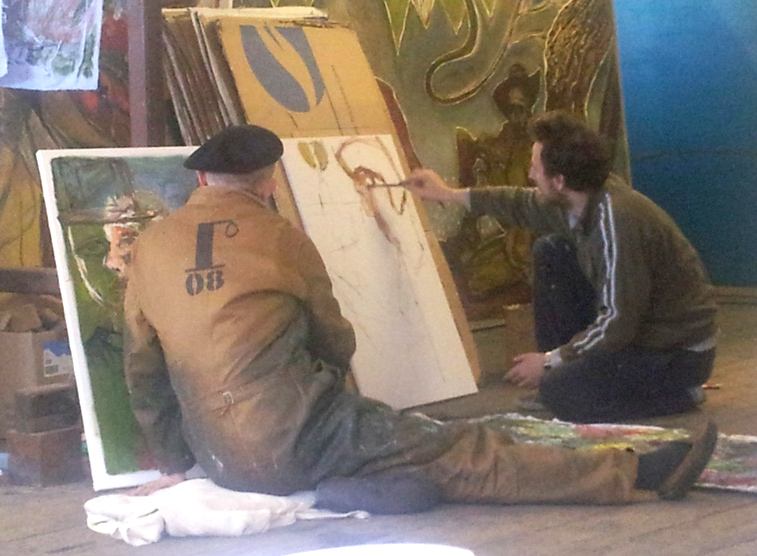
Billy Childish and Edgeworth Johnstone working together on their collaboration paintings (Heckel’s Horse)

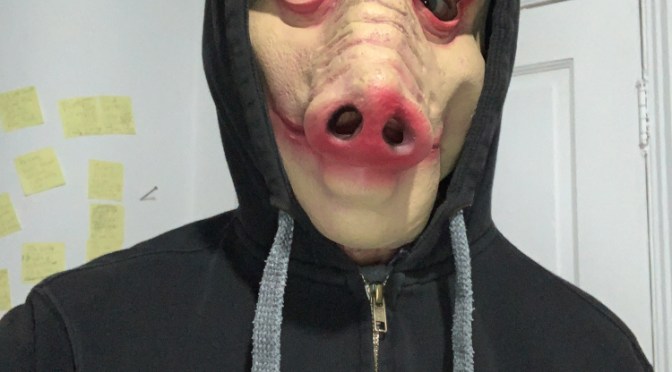
Edgeworth Johnstone now holds demos outside Tate Modern, Tate Britain and near Camden Market, wearing a pig mask, under the alias Jompiy:

Above: Edgeworth Johnstone of The Other Muswell Hill Stuckists

We’re beyond Stuckism at its worst

The Other Muswell Hill Stuckists respond to The Courier: ‘Stuckism’: Emancipating art or Stifling Creativity.

There’s no linchpin. Nothing connects Robert Janás photography with Edgeworth Johnstone painting.

The Other Muswell Hill Stuckists declare in our manifesto Stuckism Art Opposition:

Pitching oneself relative to what one is not is for ones that have not.

If Stuckism was best defined by what it isn’t, it wouldn’t be worth bothering with. As we declare in our Stuck Near Tate Modern manifesto:

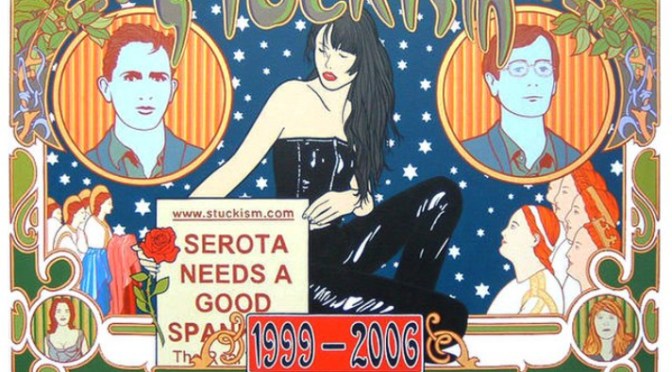
The Stuckists demo 2 days a year, paint 363, and the press call us a ‘protest group’.

Stuckism’s best defined by standing in front of a Ron Throop painting. Yet, for every article on Stuckism that fails to mentions Ron Throop, there’s ten thousand that mention Tracey Emin.

Stuckism’s a second-hand record store you spend half your afternoon flicking through because you know there’s diamonds in the rough and nothing at HMV.

The Other Muswell Hill Stuckists put to bed the following three unimportant questions:

Question 1: Should art be for a wealthy elite?
Answer: Who cares?

Question 2: Should art be so commercialised?
Answer: Who cares?

Question 3: And most unimportantly, should art be so ambivalent at the expense of ‘authenticity’?
Answer: Who cares?

The Other Muswell Hill Stuckists impression of every article on Stuckism ever written: ‘blah, blah, blah, Tracey Emin, blah, blah, blah.

The Other Muswell Hill Stuckists proudly declare ‘We’re a moribund troupe of alternative painters lamenting dead art movements who celebrate Saatchi’s conceptualist cronyism. We’re beyond Stuckism at its worst.

Follow The Other Musweill Hill Stuckists on X

Stuckism For Your Ears

Stuckism For Your Ears footage at Black Ivory Printmaking & Audio Club, March 2024.

The first of its event was held an Edgeworth Band gig at the Beehive music venue in Bromly-by-Bow in East London on September 1st 2023. Tragically, less than a minute was captured on film.


Footgage of the Stuckism For Your Ears gig

Featuring Shuayb – dancer & Headcase drummer

Stuckism For Your Ears rehearsal

The second Stuckism For Your Ears event was held at Black Ivory in March 2024 and included performances from Stuckism co-founder Charles Thomson, Rose and Ron Throop (Ron founded a Stuckism group in Oswego, New York USA) and Edgeworth Band. Watch for a cameo appearance from founder Stuckist member, Eamon Everall:

featuring Eamon Everall, founder member of Stuckism


Dystopia 2022

Site managed by Black Ivory
Site Map | Instagram | Fan Club

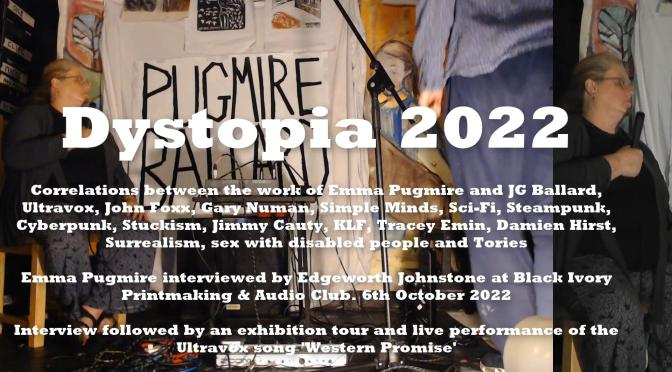
Dystopia 2022 interview with Emma Pugmire. 6th October 2022.

Dystopia 2022

Correlations between the work of Emma Pugmire and JG Ballard, Ultravox, John Foxx, Gary Numan, Simple Minds, Sci-Fi, Steampunk, Cyberpunk, Stuckism, Jimmy Cauty, KLF, Tracey Emin, Damien Hirst, Surrealism, sex with disabled people and Tories

Emma Pugmire interviewed by Edgeworth Johnstone at Black Ivory Printmaking & Audio Club. 6th October 2022

Interview followed by an exhibition tour and live performance of the Ultravox song ‘Western Promise’

Black Ivory Printmaking & Audio Club present

An Emma Pugmire solo exhibition

Black Ivory Printmaking & Audio Club founder, Edgeworth Johnstone: ‘Dystopia 2022 is the seventh in a series of Stuckist solo shows at Black Ivory Printmaking & Audio Club in Muswell Hill, London. This series follows immediately on from our Stuckist group show, titled Stuckism.

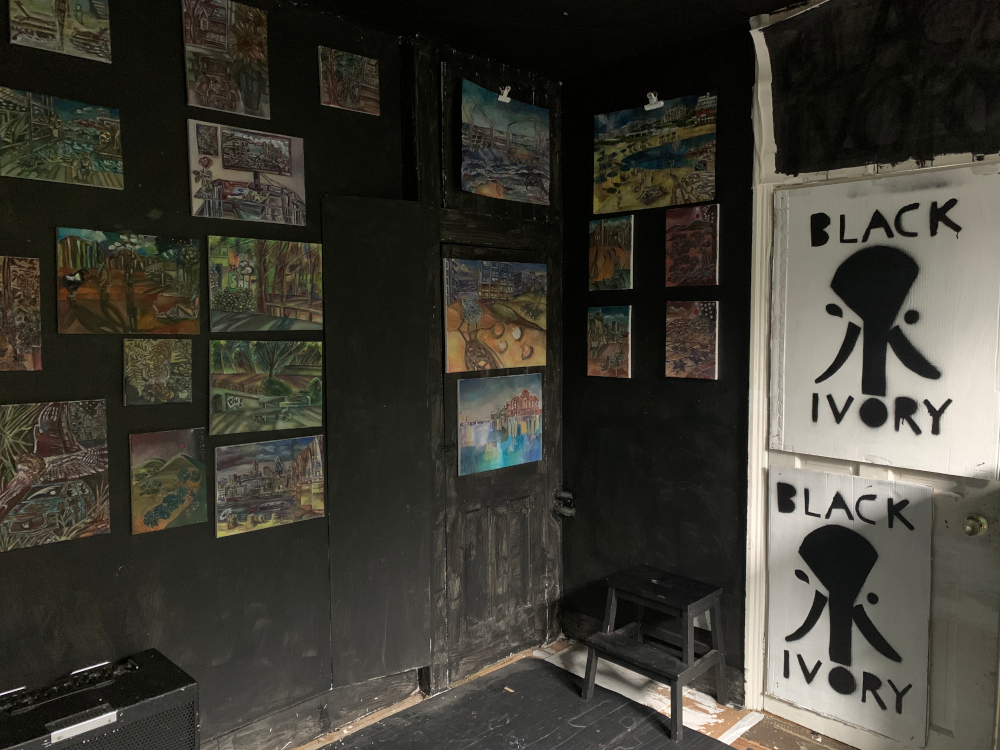
Black Ivory Printmaking & Audio Club is a private members club in Muswell Hill, London, UK. It was founded around 2013 by Edgeworth Johnstone. It is now also a black wall gallery in direct response to the Stuckist manifesto.

Post-interview performance of Western Promise. An Ultravox cover:

Western Promise – Ultravox cover. Played immediately after, and relating to the Dystopia 2022 interview.
Dystopia 2022 – Emma Pugmire and JG Ballard.

Dystopia 2022 – Emma Pugmire and JG Ballard.

Dystopia 2022 – Emma Pugmire and JG Ballard.

Dystopia 2022 – Emma Pugmire and JG Ballard.

Dystopia 2022 – Emma Pugmire and JG Ballard.

Dystopia 2022 – Emma Pugmire and JG Ballard.

Dystopia 2022 – Emma Pugmire and JG Ballard.

Join the Fan Club to receive our regular publications
(Free worldwide shipping included).

Watch our Weekly Instagram Live Video Podcast: Thursday nights at 7pm GMT.

Site managed by Black Ivory
Site Map | Instagram | Fan Club

Ron Throop Solo Exhibition 2 of 2

Site managed by Black Ivory
Site Map | Instagram | Fan Club

Ron Throop interviewed for his second solo show at Black Ivory Printmaking & Audio Club.

Black Ivory Printmaking & Audio Club present

Ron Throop Exhibition 2 of 2

A Ron Throop solo exhibition

Black Ivory Printmaking & Audio Club founder, Edgeworth Johnstone: ‘Ron Throop Exhibition 2 of 2 is the sixth in a series of Stuckist solo shows at Black Ivory Printmaking & Audio Club in Muswell Hill, London. This series follows immediately on from our Stuckist group show, titled Stuckism.

Black Ivory Printmaking & Audio Club is a private members club in Muswell Hill village, London, UK. It was founded around 2013 by Edgeworth Johnstone. It is now also a black wall gallery in direct response to the Stuckist manifesto.

Ron Throop Solo Show 2 Silent Tour

Ron Throop Exhibition 2 of 2. Photo by Edgeworth Johnstone at Black Ivory Printmaking & Audio Club, 7th September 2022.

Ron Throop Exhibition 2 of 2. Photo by Edgeworth Johnstone at Black Ivory Printmaking & Audio Club, 7th September 2022.

Ron Throop Exhibition 2 of 2. Photo by Edgeworth Johnstone at Black Ivory Printmaking & Audio Club, 7th September 2022.

Ron Throop Exhibition 2 of 2. Photo by Edgeworth Johnstone at Black Ivory Printmaking & Audio Club, 7th September 2022.

Ron Throop Exhibition 2 of 2. Photo by Edgeworth Johnstone at Black Ivory Printmaking & Audio Club, 7th September 2022.

Ron Throop Exhibition 2 of 2. Photo by Edgeworth Johnstone at Black Ivory Printmaking & Audio Club, 7th September 2022.

Ron Throop Exhibition 2 of 2. Photo by Edgeworth Johnstone at Black Ivory Printmaking & Audio Club, 7th September 2022.

Join the Fan Club to receive our regular publications
(Free worldwide shipping included).

Watch our Weekly Instagram Live Video Podcast: Thursday nights at 7pm GMT.

Site managed by Black Ivory
Site Map | Instagram | Fan Club

Emma Pugmire Exhibition & Interview

Site managed by Black Ivory
Site Map | Instagram | Fan Club

Black Ivory Printmaking & Audio Club present

Emma Pugmire

An Emma Pugmire solo exhibition

Black Ivory Printmaking & Audio Club founder, Edgeworth Johnstone: ‘Emma Pugmire is the fifth in a series of Stuckist solo shows at Black Ivory Printmaking & Audio Club in Muswell Hill, London. This series follows immediately on from our Stuckist group show, titled Stuckism.

Black Ivory Printmaking & Audio Club is a private members club in Muswell Hill village, London, UK. It was founded around 2013 by Edgeworth Johnstone. It is now also a black wall gallery in direct response to the Stuckist manifesto.

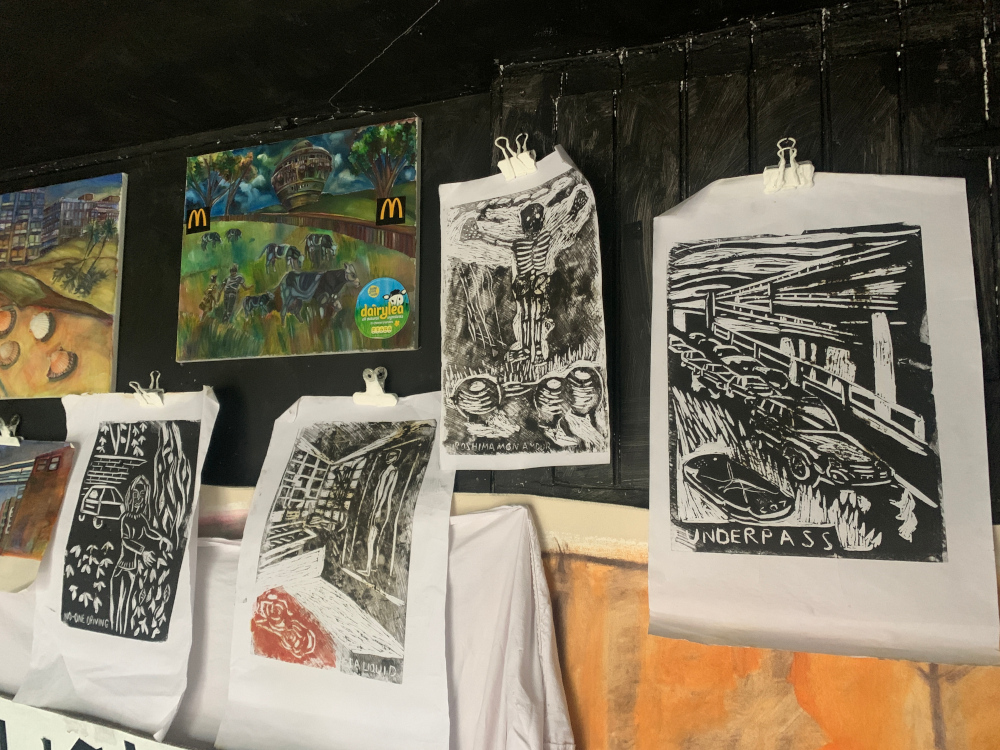
Emma Pugmire at her solo exhibition. Photo by Edgeworth Johnstone at Black Ivory Printmaking & Audio Club, 25th August 2022.

Emma Pugmire exhibition. Photo by Edgeworth Johnstone at Black Ivory Printmaking & Audio Club, 25th August 2022.

Emma Pugmire exhibition. Photo by Edgeworth Johnstone at Black Ivory Printmaking & Audio Club, 25th August 2022.

Emma Pugmire exhibition. Photo by Edgeworth Johnstone at Black Ivory Printmaking & Audio Club, 25th August 2022.

Emma Pugmire exhibition. Photo by Edgeworth Johnstone at Black Ivory Printmaking & Audio Club, 25th August 2022.

Emma Pugmire exhibition. Photo by Edgeworth Johnstone at Black Ivory Printmaking & Audio Club, 25th August 2022.

Emma Pugmire exhibition. Photo by Edgeworth Johnstone at Black Ivory Printmaking & Audio Club, 25th August 2022.

Emma Pugmire exhibition. Photo by Edgeworth Johnstone at Black Ivory Printmaking & Audio Club, 25th August 2022.

Emma Pugmire exhibition. Photo by Edgeworth Johnstone at Black Ivory Printmaking & Audio Club, 25th August 2022.

Emma Pugmire exhibition. Photo by Edgeworth Johnstone at Black Ivory Printmaking & Audio Club, 25th August 2022.

Join the Fan Club to receive our regular publications
(Free worldwide shipping included).

Watch our Weekly Instagram Live Video Podcast: Thursday nights at 7pm GMT.

Site managed by Black Ivory
Site Map | Instagram | Fan Club

Ron Throop Solo Exhibition 1 of 2

Site managed by Black Ivory
Site Map | Instagram | Fan Club

Charles Thomson (Stuckism co-founder) presents the work of Ron Throop. Filmed at Black Ivory Printmaking & Audio Club, 14th Auguat 2022.

Black Ivory Printmaking & Audio Club present

Ron Throop Exhibition 1 of 2

A Ron Throop solo exhibition

Black Ivory Printmaking & Audio Club founder, Edgeworth Johnstone: ‘Ron Throop Exhibition 1 of 2 is the fourth in a series of Stuckist solo shows at Black Ivory Printmaking & Audio Club in Muswell Hill, London. This series follows immediately on from our Stuckist group show, titled Stuckism.

Black Ivory Printmaking & Audio Club is a private members club in Muswell Hill village, London, UK. It was founded around 2013 by Edgeworth Johnstone. It is now also a black wall gallery in direct response to the Stuckist manifesto.

Ron Throop Exhibition 1 of 2. Photo by Edgeworth Johnstone at Black Ivory Printmaking & Audio Club, 14th August 2022.

Ron Throop Exhibition 1 of 2. Photo by Edgeworth Johnstone at Black Ivory Printmaking & Audio Club, 14th August 2022.

Ron Throop Exhibition 1 of 2. Photo by Edgeworth Johnstone at Black Ivory Printmaking & Audio Club, 14th August 2022.

Ron Throop Exhibition 1 of 2. Photo by Edgeworth Johnstone at Black Ivory Printmaking & Audio Club, 14th August 2022.

Ron Throop Exhibition 1 of 2. Photo by Edgeworth Johnstone at Black Ivory Printmaking & Audio Club, 14th August 2022.

Ron Throop Exhibition 1 of 2. Photo by Edgeworth Johnstone at Black Ivory Printmaking & Audio Club, 14th August 2022.

Ron Throop Exhibition 1 of 2. Photo by Edgeworth Johnstone at Black Ivory Printmaking & Audio Club, 14th August 2022.

Join the Fan Club to receive our regular publications
(Free worldwide shipping included).

Watch our Weekly Instagram Live Video Podcast: Thursday nights at 7pm GMT.

Site managed by Black Ivory
Site Map | Instagram | Fan Club

Jasmine Surreal Solo Exhibition & Interview

Site managed by Black Ivory
Site Map | Instagram | Fan Club

Jasmine Surreal exhibition tour at Black Ivory Printmaking & Audio Club, Muswell Hill, London UK. Filmed 13th August 2022.

Jasmine Surreal interviewed by Edgeworth Johnstone for her solo show at Black Ivory Printmaking & Audio Club. Filmed 12th August 2022.

Black Ivory Printmaking & Audio Club present

Jasmine Surreal

A Jasmine Surreal solo exhibition

Jasmine Surreal founded the Merseyside Stuckists.

Exhibition co-curator, Edgeworth Johnstone: ‘Jasmine Surreal is the third in a series of Stuckist solo shows at Black Ivory Printmaking & Audio Club in Muswell Hill, London. This series follows immediately on from our Stuckist group show, titled Stuckism.

Black Ivory Printmaking & Audio Club is a private members club in Muswell Hill village, London, UK. It was founded around 2013 by Edgeworth Johnstone. It is now also a black wall gallery in direct response to the Stuckist manifesto.

Jasmine Surreal exhibition at Black Ivory Printmaking and Audio Club 6

Jasmine Surreal exhibition at Black Ivory Printmaking and Audio Club 5

Jasmine Surreal exhibition at Black Ivory Printmaking and Audio Club 4

Jasmine Surreal exhibition at Black Ivory Printmaking and Audio Club 3

Jasmine Surreal exhibition at Black Ivory Printmaking and Audio Club 2

Jasmine Surreal exhibition at Black Ivory Printmaking and Audio Club 1

Join the Fan Club to receive our regular publications
(Free worldwide shipping included).

Watch our Weekly Instagram Live Video Podcast: Thursday nights at 7pm GMT.

Site managed by Black Ivory
Site Map | Instagram | Fan Club

Heckel’s Horse Jr. interview at Heckel’s Horse Jr.

Site managed by Black Ivory
Site Map | Instagram | Fan Club

Heckel’s Horse Jr. interviewed at Black Ivory Printmaking & Audio Club, Muswell Hill, London. August 9th 2022 by Charles Thomson, Stuckism co-founder.

Click HERE for the official Heckel’s Horse Jr. webpage.

Heckel’s Horse Jr. (aka Edgeworth Johnstone) interviewed by Charles Thomson.

August 9th 2022 at “Heckel’s Horse Jr.” The first exhibition of Heckel’s Horse Jr. paintings, held at Black Ivory Printmaking & Audio Club in Muswell Hill, London. 

CT: I’d like to start with your name.

HHJ: For the purposes of this exhibition, my name is Heckel’s Horse Jr., but I’m aka Edgeworth Johnstone.

CT: So, we are here at the exhibition in…is there a name for this galley?

HHJ: Black Ivory Printmaking & Audio Club.

CT: Right, so do you want to say anything about the gallery, the situation, before we get on to the paintings?

HHJ: This room until quite recently, was white. You probably remember it as being painted white. And I decided to paint it black. As I was painting it black, it occurred to me that it took on quite a nice atmosphere. And it reminded me, for some reason of the Stuckist manifesto. So I decided it would be a good idea to host a load of exhibitions here. The first of which was a general Stuckist show…Actually, I don’t know at what point I decided to do multiple shows. I think it was actually after the Stuckist show, I thought I should start doing solo shows. And I’ve got a load of your work, so you were the first solo. And then I thought ‘Well. there’s no limits.’ because it doesn’t cost anything to do. So we can just do as many shows as we like of Stuckism, and it all started off from just painting the walls black. 

CT: I must say, I think this is great because people I’ve heard over the years often say ‘Oh, I can’t do a show.’ And I say, ‘Well, you’ve got a flat, haven’t you? You’ve got a house. You’ve got a bedroom. You’ve got a gallery.’ In fact, when I first started out, I did three print shows in America at various galleries in New York and Los Angeles. I knew people and they kindly renamed their living quarters a gallery for a week, and had some of my…So, we’ve got the gallery, which is an example to everybody in the world. Especially people that can’t get a gallery exhibition.

HHJ: You’ll do a better job of it anyway. They say ‘If you want something done properly, do it yourself.’

Heckel’s Horse Jr. aka Edgeworth Johnstone interviewed at his solo show, title Heckel’s Horse Jr,

CT: Did you know my mother?

HHJ: I spoke to your dad once very briefly, but not your mother. It’s funny because your dad thought I was Seb.

CT: That’s my son.

HHJ: Because, for some reason I picked up the phone in your house. I don’t know how it happened. It’s funny the ‘If you want something done properly, do it yourself’ thing because this is my way of showing the Heckel’s Horse work. It’s to just do them myself and then I can show them.  

CT: And this segways neatly into Heckel’s Horse. Shall we say who Heckel is to start with?

HHJ: Eric Heckel, one of the German Expressionists, who Billy in particular…I mean, I like Heckel as well, but Billy’s a big fan of his.

CT: Note to the audience: Billy is Billy Childish. Who we’ll come on to in a moment. 

HHJ: We started some group a few years ago 2014-15 and I think Billy came up with the name ‘Heckel’s Horse’ for the group. But at the time Billy and I were painting all these paintings together which we called ‘Childish Edgeworth’ because that was us. And then Steve, who works with Billy, came up with the idea of calling our partnership ‘Heckel’s Horse’. 

CT: Why horse?

HHJ: I think it refers to a picture that Eric Heckel did that I think Billy’s particularly keen on. To be honest I don’t know. I’m just guessing.

CT: You mentioned German Expressionism. Erich Heckel was a member of Die Brucke group, founded about 1905. Perhaps Ludwig Kirchener was the leading light of it and packed up after 5 years or so from disputes. But there was another German Expressionist group at the beginning of the twentieth century called ‘The Blue Rider’ which people might confuse with Heckel’s Horse. They might think the rider was on Heckel’s Horse but that’s not anything to do with it?

HHJ: No, as far as I’m aware.

CT: I should say for the audience who don’t know, Billy, being Billy Childish, who’s known for various things, particularly his music. He’s been namechecked by quite a lot of famous people including that guy from The White Stripes. Bjork, is it? 

HHJ: I don’t know about Bjork, but there are a few.

CT: A number of different people who are quite well known. He’s also an artist. A writer. He’s probably known as Tracy Emin’s ex-boyfriend if the truth be told, which is unfair because he’s got a lot more achievements than that. And actually, that fact that she once said to him ‘Your paintings are “stuck, stuck, stuck” because he was painting and she exhibited her bed…or she hadn’t done it by then but the sort of thing she was into. And he wrote that in a poem and in 1999 he read the poem to me and I said we should call ourselves ‘Stuckists’, and then the Stuckists art group was founded to promote figurative painting. That was 1999. You’ve founded a Stuckist group. There’s about 250 Stuckist groups in 50 countries around the world. 

Steve is the guy who runs the L-13 gallery near Clerkenwell/ Farringdon area of London. And the L-13 was named after a German Zeppelin bomber which destroyed some property in that area. I think the gallery was next door to the destroyed property. Anyway, that’s where L-13 comes from but it’s moved from that place. And they work together. Steve, at L-13 promotes Billy’s work. He also does stuff himself, doesn’t he?
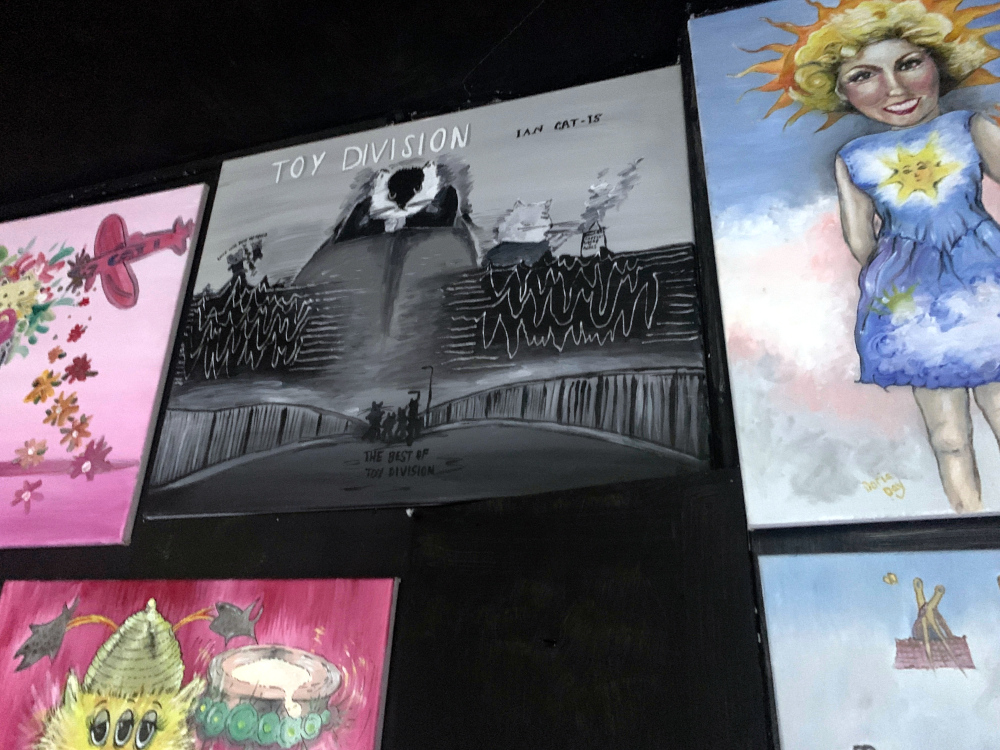
HHJ: Harry Adams.

CT: There’s also Jimmy Cauty of the K Foundation. Burned a million pounds. Jamie Reid who did the Sex Pistols ‘Never Mind the Bollocks’ album. So that’s all the background that I didn’t really want to say, but anyway you got to know them. And you go down every Monday and work with Billy in his gallery. Billy’s gallery is a very large room that is in Chatham Dockyard.

HHJ: His studio, we’re talking about.

CT: Yes, I said ‘gallery’ did I? That’s his studio. You work there. Billy does very large paintings. 

HHJ: Huddie Hamper as well. He’s there every week.

CT: That’s Billy’s son. Billy does 8ft/ 10ft paintings in a couple of hours.

HHJ: Maybe not two but in an afternoon he’ll do a huge painting from start to finish.

CT: But the ones he does are a very different style. One could say he’s become quite academic. They’re drawn accurately, in terms of perspective and anatomy and so on. And they sell very well in galleries in Germany and New York but alongside those paintings there is another activity going on which he does with you. Would you like to tell us how that activity started and how it happens when you’re there together.

HHJ: Shall I start from the point where I was already in his gallery painting? Or I can start from where I first got in touch with him.

CT: Well start from the beginning.

HHJ: Now I’ve got to try and remember how it happened.  

CT: Well you went to L-13 the gallery and saw his shows and talked to him, I presume.

HHJ: Maybe a couple of words. Until he emailed me out the blue one day I’d said hardly anything to him. I’d met him a couple of times at L-13 but…he just emailed me. I think you said to me that you speak to him on the phone every now and then, to Billy, and you mentioned me. I guess he heard of me, probably, through you. I don’t know.

CT: I should say I’ve known Billy since 1979. We were in a group called The Medway Poets. Tracey Emin was a young fashion student and was going out with Billy. So yeah, we had had our ups and downs, but we’ve gotten on reasonably well for the last twenty years or so. 

HHJ: So I guess he probably heard of me through you and then he emailed me, and I ended up talking to him through email having not really ever spoken to him before. Only small talk at an exhibition and he said ‘You should come down one day.’ That was it. He wanted to see my paintings because I was showing him my work and he said ‘Oh, you should bring them down one day.’  So I did and he saw them and we had a chat and then he said ‘Is it quite a bother for you coming down here?’  he said one day. and I said ‘It’s quite easy.’ because I had a car at the time. I said ‘I can drive to Chatham in three quarters of an hour.’ And he goes ‘Well, you should come down the studio one day.’ So I went down the studio and I was working and he says ‘You know what you should do. You should get some big canvases’ because he thought it would be better for my work and this is funny because Billy didn’t know me and he just offered. It’s very kind of charitable. So he’s helping me out a ton and he says ‘You should get a load of canvases and we’ll put you up in my studio and I’ll give you a load of space because I think if you work bigger it’ll work. It will be better for your style of painting or whatever, because I was always working small because of my living situation. So I did that, but I think, before I got the canvases I turned up with a load of cardboard and I was doing a painting on cardboard that was a copy of a block print I’d done. It was a portrait of Picasso and it had a couple of birds on it. Sort of pecking his eyes out and stuff like that and he goes ‘Oh that’s alright but..’ he said ‘Can I…’. Did he ask? I don’t know. I think he probably did. He said ‘Wouldn’t it be good if it had a couple of lines.’ So I had three or four of these Picasso’s. They weren’t particularly precious or anything. They were on cardboard and he painted some eyes or a few white lines on them and it looked a lot better. And he goes ‘Ok, well that’s quite good.’ so then I start painting on these great big canvases. Like six foot canvases. And again, the same thing happened because it was very much kind of…Billy was kind of helping me sort of getting into a different area of painting so he would paint on them and the first one we did on canvas, that looked really good as well. So he goes ‘You know what, we should do a ton of…’ Well, he didn’t say to do a ton, but ‘We should do more of these.’ and we ended up just continually doing more and more and more because they’re so easy. They’re easy for me because I can just start and I don’t even have to bother making them look good. I just need to leave them in a good state for Billy. So I painted and he would come over and he’d do…and it was just so automatic and so sort of natural and they had a kind of look to them that neither mine nor his works do. They’re their own thing and it kind of snowballed and ten years, or nine years later, we’re still…to be honest since covid we’ve only done a couple. We’ve slowed right down recently.

CT: How many do you think you’ve done all together?

HHJ: I reckon between 150 and 200. 

CT: So you usually do one each visit, do you?

HHJ: Not anymore. No.

CT: When you were working before, at your peak.

HHJ: At our peak probably one a week. Probably averaged one a week.

CT: And you exhibited these at Pushkin House. What is Pushkin House and where is that?

HHJ: That was a group show. Pushkin House is in central London and is some centre for Russian culture. I don’t know exactly what their description is.

CT: Good job it’s not called Putin House. Anyway, sorry.

HHJ: I don’t know how that show came up because Billy and Steve tend to do the organising side of things and I hear about it later. 

CT: I just want to make the point that you have shown them there.

HHJ: We’ve been in three group shows. One was Pushkin House. That was the most prestigious of the three. We did one at Sun Pier House.

CT: That’s Chatham in Kent, near Billy’s studio. 

HHJ: And there was some show in Russia where they showed some Heckel’s Horse. Although I don’t think we were called ‘Heckel’s Horse’ at that point but some of them were showed over there. I don’t know. All I know about that…I looked on YouTube one day and saw my paintings being auctioned off, and no one told me they were selling them.

CT: This is the joint paintings was it?

HHJ: No, these were oil transfer drawings I did. I just saw on YouTube that my paintings were being sold, which was interesting. 

CT: So far so good. Now these are not actually Heckel’s Horse paintings. 

HHJ: No they’re not.

CT: They are your copies of…Oh, shall I, before I forget, are these Heckel’s Horse paintings for sale or are you keeping them privately?

HHJ: Keeping them. I’ve only done eight and I don’t really want to sell them.

CT: No, not these. I’m talking about the ones you did with Billy.

HHJ: I don’t know.

CT: Just for the viewers. We have a few millionaires knocking around.

HHJ: They’re not sort of…you can’t buy them online or anything and there’s no gallery showing them. But if someone was to ask I guess everything has a price.

CT: This is very amateur, by the way. Just in case anyone here thinks this is a professional job with a whole camera crew, sound recording, overhead lighting and so on and a van outside with masses of wires trailing out of it, it’s not. It’s just one camera on a tripod. Actually, they’ve probably guessed that by now anyway.

HHJ: I don’t think we were fooling anyone.

CT: We could pretend it’s a high end thing meant to look like a low end thing. Just to do a quick detour before we get onto the paintings, a detour about the video here. This is a homemade show. What about your videos? What’s the philosophy of the videos? How do you do those?

HHJ: Just film them. Put them on YouTube. Put them on social media. We’ve got an audience of like four people.   

CT: So it’s quadrupled since I last looked. That’s bloody good. You’ve gone up 400%.

HHJ: It’s kind of in keeping with the whole atmosphere of what we’re doing.

CT: Billy once told me that he did a gig in Germany and ten people turned up. They said ‘Look, we don’t expect you to play because you don’t have a proper audience.’ He said ‘You’re here. You’re the audience. We’re playing.’ And it turns out that one of them was an influential music journalist. 

HHJ: Yeah, you never know.

CT: Well does it matter? What’s the difference between having an audience of one and having an audience of ten thousand or a million?  

HHJ: Exactly.

CT: I mean, if you add noughts on the end. My experience of curating shows is that I do it because I enjoy seeing the paintings. Which is probably a selfish approach but means I don’t get het up and frustrated about who’s coming through the door and who isn’t. You know, if the people who are there enjoy it. Those four people really get something from it. You don’t know how it’s going to affect their lives and things tend to pick up later. When Cubism started there were only two people who knew about it. Picasso and Braques. Just two people. It’s grown a bit since then. 

HHJ: You never know.

 CT: So everything is homemade.

HHJ: Yes.

CT: Now, as I said, these are not Heckel’s Horse paintings. These are fake Heckel’s Horse paintings. Not fake perhaps. That’s not the right word. You have made your own copies of Heckel’s Horse paintings. These are your copies of the work you did with Billy. These are on cardboard. The ones you do with Billy are on canvas aren’t they?

HHJ: Linen, but yeah. Stretched Belgian linen. Well no, actually some of them are on canvas but most of them aren’t.

CT: For the viewers who don’t know the difference, it’s all the same. It just looks like a canvas, stretched. One is made from cotton and the other’s made from linen. But it don’t make any bloody difference does it really? Except for linen lasts longer than canvas. But the sails from Nelson’s Victory lasted quite a long time. They’re still there with lots of cannonball holes in them and stuff. They found them the other day. A couple of years. Or three years ago or so. Anyway, they’ve survived. Are the originals bigger?

HHJ: Yes, they are.

CT: How much bigger? Let’s take this one for example.

HHJ: That one’s a 6ft by 5 I think.

CT: This one’s about 40 x 30 or something and it’s your reproduction of a 6 by 5ft. So, quite a lot bigger. It’s like what, a quarter of the size? Why did you decide to do it this size?

HHJ: Just that’s what the materials are that I have. I didn’t need them to be big. 

CT: Why did you do them?

HHJ: Lots of reasons. I suppose the one main thing is I like them and I can do them. It’s not that I could….I definitely couldn’t do them without Billy, but I am sort of quite…

CT: No, sorry, why did you do these?

HHJ: Sorry, I’m not trying to say I couldn’t do the main Heckel’s Horse without Billy, when I say I’m quite interested to see what they look like when I just do them on my own. You know what I mean?

But also, I wanted to use this space to do the show. Some sort of thing for Heckel’s Horse because Heckel’s Horse…despite Billy and I always wanting to do a show, it’s never really been possible and I thought ‘Well, I’ve got Charles’s show up here.’ Which I did at the time. 

CT: That’s me by the way.

HHJ:  And the plan was, I think, for Jasmine to go next. 

CT: Jasmine Surreal. Yes, her paintings are down here actually. Next to me. 

HHJ: Jasmine Surreal was lined up next but I thought ‘I could take Charles’s work down now and get mine in quickly because I’ve got you, Ron Throop, Emma Pugmire, and I was thinking, ‘When am I going to do my show?’ because I want to get mine done. So I thought if I quickly took down yours I could do an Edgeworth Johnstone show. But then I thought ‘I’ve got no enthusiasm for doing an Edgeworth Johnstone show but what I would like to do is put up Heckel’s Horse paintings.’ But, obviously I can’t do that because they’re not mine. They’re me and Billy. So I thought ‘If I do them myself then I’ve got complete control and I can put them up.’ And I can not only do an art show but I can promote Heckel’s Horse, so more people learn about Heckel’s Horse and also for the artistic value in themselves. Hopefully do some decent paintings.

CT: So what’s this exhibition called? Who is it by?

HHJ: It’s called Heckel’s Horse Jr. and it’s by Heckel’s Horse Jr. A self-titled exhibition.

CT: Ok, so, let’s just take this painting. I’m familiar with some of the originals so I recognise these are the types of paintings you’ve been doing. The ones I’ve seen in Pushkin House, for example. But I don’t know them in intimate detail so could be fooled because they’re kind of like it. So if I put the original next to this, apart from the size what differences will I see?

HHJ: Not much. I have pretty much just copied them. This one, we did after a painting by Mikhail Larionov. We did quite a lot after Larionov who is a Russian painter from a couple of hundred years ago.

CT: Early twentieth century.

HHJ: Most people might know his…I don’t know if they ever got married, but his partner Natalia Gonchorova is quite well known. 

CT: Yes, is the highest selling female artist at auction, I think.

HHJ: He was Russian but there’s links with him and Picasso and that whole avant-garde crowd.  Billy and I did a load of paintings after Larionov and this is painted after the first Heckel’s Horse painting we did of a Larionov painting.

CT: Have you more of less copied a Larionov painting?

HHJ: No.

CT: Is it in the style of, or inspired by?

HHJ: Inspired by Larionov. So the Heckel’s Horse paintings that were done after Larionov are not copies. We use Larionov as a starting point but the end result looks quite a lot different. 

CT: I see, so the whole Heckel’s Horse project stem from Larionov’s inspiration?

HHJ: No we were already painting together before we started doing Larionov paintings.

CT: In the same style?

HHJ: Pretty much. I mean, we were already…

CT: So he just got hijacked and incorporated into it en route, and you moved on. Like a little bump in the road, and you carried on going?

HHJ: We didn’t stop, you know what I mean? We did them as well as. It’s like, instead of always doing a painting from, maybe a sketch or even just off the cuff, occasionally Billy would have this Larionov book and we’d go through it. We’d pick out paintings that we liked. But it’s not like we stopped doing Heckel’s Horse and we started doing something else. It wasn’t like a chunk of work in its own right. We just happened to do lots of Larionovs.  

CT: Yeah, but it’s not called ‘Larionov’s Lunger’ is it? It’s called Heckel’s Horse, so…Have you done the same thing with Erich Heckel’s work? Your own variants of that?

HHJ: I think we have. I think we’ve done maybe two or three. More Larionov’s than anyone else but we have done a couple of Heckel’s as well.

CT: It seems really that these people are just a catalyst for you to do your own work.

HHJ: Yeah.

CT: So if we get on to the paintings themselves. The first thing that you would notice about them is there is a figurative element. There’s often a person or people. Sometimes a horse. There’s a horse and person there. There seems to be a person in all the ones that are here. Is there a meaning? A narrative? A story? Or is it just a visual? Is it just that it works visually. Like you have a dream and you see things going on. Or are you thinking actually ‘This is a particular soldier.’ Maybe it’s Larionov in uniform, or something like that. Or maybe ‘He painted these Russian soldiers so we’re going to comment on that.’ Or maybe Kirchner of the Die Brucke Expressionist group was a soldier for a time. Does that come into it? Or is this me just projecting onto it things that I know. Am I meant to be doing this? Or is there a story that I should know, that you know. Or is it just a guy on a horse with a bit of a uniform?  

HHJ: As far as I’m concerned, there’s no real comment or meaning or requirement to know anything. They’re stand alone paintings that you don’t need to have any background knowledge to appreciate.

CT: Do you have any? Do you think ‘Ah yeah, this is reminding me of …’

HHJ: No. All I’m trying to do when I’m painting is do a good painting. There’s nothing else.

CT: Ok, well I’m going to challenge you a little bit on that because he is in uniform. It’s like a military uniform. Not like a contemporary, modern day soldier. Unless he’s dressed up in traditional uniform so you must have got that reference from somewhere. It’s not an accident. You can’t just do someone in a uniform without knowing that people wore uniforms.

HHJ: Well I’m just copying the painting.

CT: No, I’m talking about the original painting.

HHJ: What, the Larionov? It’s a painting of a Heckel’s Horse painting which was based on a Larionov.

CT: That’s what I’m getting at.

HHJ: And in the Larionov painting, that’s what the guy’s wearing.

CT: Yeah, so he knew he was painting a cavalryman.

HHJ: Larionov would have done, yeah.

CT: He definitely knew he was painting a particular soldier at that time in history. I presume it was just before the First World War.

HHJ: I don’t know.

CT: So he knew what he was doing but you’re not really bothered with that side of it at all.

HHJ: Not really. No. I mean, not at all. I like a painting to be a good painting. I don’t really mind the background story. 

CT: One of the things that’s said about figurative painting is that every figurative painting is an abstract painting. And you’re demonstrating that.

CT and HHJ are now holding one of the paintings from the show upside down in front of the camera.

CT: The reason I’ve done that…Kandinsky….well, he was doing these figurative paintings and he came in one day, and he saw this painting propped up with the most amazing colours. Completely abstract. And then he realised, it was one of his figurative paintings, of a landscape or something but that gave him the idea that he could just paint abstract without having to have a figurative work. A figurative image. And when you look at things in different ways. Like, shall we try it sideways as well? I mean, it works without even having to know there’s an image. Rather like Chinese calligraphy type paintings, where someone will do beautiful brush marks all over the surface and it’s that movement, that gesture that the brush makes which gives it the interest. And anybody that’s done something like that will know that you can do that brush mark and it can be very dull and prosaic, or you can do it and the variation, the pressure, and the dynamic and the direction it’s going in, the flow of the ink and so on comes alive. So I think it’s not just a question of painting the subject. It’s really how you paint it. I think, how you paint it comes from who you are. And I’ve thought about this quite a lot, before you have any art you have an artist and they’re going to leave their stamp on the painting. They can’t help it. If someone is a superficial person, they’re not suddenly going to find an amazing depth when they do a painting. If they do then they’re touching a deeper part of themselves anyway. But if they never access that deeper part of themselves, and unless it does come out despite themselves, if you like, their work’s going to be superficial. So every mark. Every colour. Every decision…I mean, conceptual art has very few decisions. Damien Hirst’s shark has one decision. I will get a shark and I will put it in formaldehyde. That’s the decision. Whereas take any of these paintings. Every square inch has got a different decision in it. There’s a red here that is slightly different to the red there. This band is a similar colour to that mark. That’s almost a rectangle of paint. This is a rectangle. A bit of a wonky one, but it’s a different kind of rectangle. I know I’m going on a bit here. You mentioned Jasmine Surreal. I did a big painting once. It was a ten foot painting. I’ve only done one that size. I wanted to get it out the living room but it’s got agitated brush marks all over it. Different colours. Different intensities.  And she looked at it and she said ‘Are you feeling more passionate, or anger there? And then you were feeling quiet…’ I said ‘You’re right.’ You could read the marks and the colours as if they were words and basically they are. We’re talking about language. It’s not one that our society, our culture is particularly skilled at reading. You know? We’re taught to read words but people are generally not taught to read images. Obviously sometimes they do it instinctively and they look at something and say ‘Oh, that’s good isn’t it.’ They’ve read the colour and the shape. Or they might say ‘That’s a bit bright.’ You know? The intensity is blinding. So there’s a primitive reading but not a very subtle and sophisticated one. And it’s like wine. You start out with a bad sweet wine and ten years later you turn your nose up at it because you’ve developed a palette. It’s like anything. The more you do it. Using words, for example. You don’t expect a five year old to have the expressive capability of Shakespear. It’s something you develop and become more sophisticated, more sensitive to, hopefully. If it’s going in the right direction. So what I’m saying is, in these paintings, there is a display of a lot of what I’m talking about. The feeling for the right colour, the right shape and the right place. 

Now to my mind, there’s a balance between what you’re painting and how you’re painting it. In abstract work obviously, it’s completely how you’re doing it because you’re not painting any specific subject and I think the interesting thing about figurative work is that tension between what it’s showing and how it’s showing it. Do you have any response to all of that?

HHJ: I don’t think people who look at paintings are aware of how much you’re considering as you’re doing them. Especially in my work that can look quite sloppy and I’m sure I’m talking for millions of other painters who…There’s a very deliberate move in everything you’re doing that’s totally beyond the concept. I know you started from saying Damien Hirst’s conceptual work was ‘Oh, it’s a concept.’ Well, who cares about the concept? You can start off with that, alright fine, but what I like in art all comes from that point onwards. And just that satisfaction you get from seeing things that look kind of balanced and correct in an abstract sense but it would have to be attached to something figurative for it to have any kind of hold on me. I couldn’t care less about abstract work at all. It has to relate to something in physical existence otherwise it just goes over my head, and I think there’s a balance there. I’m trying to do as much abstract work as I can in a figurative painting and having nothing else at all. Not having any concept, or meaning, or narrative. If you take all that stuff out you’re left with a more pure thing at the end of it.

CT: As soon as you do anything figurative you’ve got a narrative, whether you want it or not.

HHJ: I’m just trying to do stuff that just looks good. There’s not really any kind of emotion in it or need to express myself.

CT: At the end of the day, I particularly apply this to poetry, which I write a lot, which I’m doing at the moment. At the end of the day, what’s left is the poem and someone reads that, and that’s got to work. The poem has got to work. So I might write about my life in the poem and it might be something that’s particular to my life but it doesn’t sit in the poem because when you’re creating something I think there’s a dialogue between you and the thing you’re creating. It’s telling you what to do. This has happened to me quite a lot. With painting, for example, I’ve thought ‘Right, I’ve got a red there.’ I’m just speaking in general terms. Crude terms. ‘A red there. A green there. And I’ll put a nice yellow there.’  So I put the red there, and as soon as I’ve done that I realise the green’s not going to work and the painting’s saying ‘Hang on. This is your bright idea but look at it. It’s not going to work is it? Actually you need the yellow there.’ And then maybe, oh we need a blue up there and then later on the colour that I left out pops up down here, so it’s not lost. It comes up again quite often in a different form, so there’s that interaction. At the end of the day you’re creating something. You’re making something and if you’re sharing it, I think you have to consider who’s looking at it. Whether you do that consciously or unconsciously. Otherwise, what’s the point of showing it? If you’re not creating something that someone can look at and get something from, there’s no point in showing them.

HJJ: I feel like I don’t even have a choice when I’m painting. It’s almost like, it needs to be that and can’t be anything else, so I can’t even consider ‘If someone else sees it they won’t like it, so I need to try and do this, or try…I’m really at the mercy of what feels like the right thing to do.

CT: I think we’re actually saying the same thing. I’m not saying you should adjust everything because someone’s going to look at it. Because actually, that happens to me. I sometimes have an idea and I think ‘I could do this painting and it’s just too easy. It’s just too simple. People are going to think it’s rubbish. I don’t want to do it but I really want to do it. People are going to think it’s rubbish.’ So I just do it and then they come along and say they really like it, but that’s just me because I suppose I have a sort of awareness to what’s going on outside me. 

HJJ: You’re doing what feels like the right thing to do anyway.

CT: Yeah, but sometimes there’s a block. Less so nowadays I must say, but in the past more so. You don’t have that. But you talked about doing what’s right on the canvas, and that’s exactly what I’m saying, that it’s telling you something. 

HJJ: I was thinking this two days ago: I was doing a painting of a fish under a boat. I realised that I don’t have any choice. This is going to be a fish under a boat. I know if I come in with my bright idea it’s going to screw it up. You’re just following orders really.

CT: The one that we pulled down from the wall and showed in front of the camera. I’m facing that so it’s the one that’s easiest for me to look at. There’s a man that seems to be wearing a hat and there’s an animal of some kind. Is it a pig of some kind? 

HJJ: I think it’s a dog.

CT: But I get a feeling from it. It’s not unpleasant. I think just a few lines can be very suggestive. The man’s face. There seems to be a certain thoughtful quality to it. He seems to have stopped and be thinking about something. That’s something everyone can relate to. And the animals there. Again, you can relate to that. It seems to be absorbed in its own life. Mooching around the ground. Sniffing the ground. The man seems aware of it but not really relevant to him at that point in time. And he’s in front of a building. Looks like his house. So you’d think it’s probably his home and maybe it’s his garden. That sort of thing. You get a feeling for the whole thing but that could be done in a very illustrative way. In a kind of Norman Rockwell or something, and you wouldn’t get the same feeling from it though. You wouldn’t get the same atmosphere and the whole sketchy thing suggests a liveliness. Conveys a liveliness. A sort of spontaneity which makes it living, whereas a Rockwell is a very skilled illustration but it’s kind of frozen in time. 

HJJ: It’s as different to what I’m doing as making cheese or playing football. I know that technically, they are both called paintings, but other than that there’s nothing. I think there’s a lot of…art’s such an overriding term but so’s figurative painting. There’s figurative painters that are not doing what I’m doing at all and that’s not necessarily a good or bad thing. Even within Stuckism. There’s painters like Jonathon Coudrille, for example. He’s absolutely brilliant at what he does but me and him, for example, I don’t know what’s going on inside his head, but I just see it as completely different.

CT: But you have been exhibited, more or less, side by side.

HJJ: Yeah.

CT: Stuckism, the art group mentioned earlier, which I had the idea of and founded with Billy Childish to promote figurative painting. But my idea of it, from the outset, was a very big umbrella. So you’d have very expressionist work. Very highly polished work. Cubism. Pop Art. Figurative Pop Art. Realist art. All different kinds of styles. It wasn’t a stylistic thing. What was important was that the artist had a strong sense of authenticity. Of honesty to themselves of their experience of life and have the skill to communicate that in their own style. And really Modernism is the history of people inventing their own rules and their own styles. Van Gogh invented his own rules, which was that things could be wonky and distorted and would be painted in a very agitated, and often swirling brush marks to express all the energy he felt in the universe. Whereas another artist, obviously Picasso for example, chose to fracture things. He didn’t, in his Cubist period have the same…well he had some of the same brush marks, but not the same effect at all. It was more or less fractured plains. He was interested in a sort of…dissecting something and putting it back together again. But it worked in his terms. If you look at any of the Modernist artists whose work is successful, they’ve invented their own domain to work in. That’s Modernism, then we come on to Postmodernism where people plunder it. Or Remodernism, where we value it and try to develop it. 

HJJ: Any good art is authentic. Van Gogh said ‘Anything done in love is done well.’ I read the Stuckist manifesto and I think ‘That’s how I write songs.’ Whenever I’m doing anything, it’s just that feeling of authenticity and nothing else. Then what you’ve got will be original because despite the fact that there’s eight billion of us, we’ve all got individual handwriting. It will be original by default. You don’t have to try and come up with some clever idea to separate yourself from the crowd, which is what I suspect is going on in a lot of contemporary art, and the art at the time of the Stuckist manifesto. It’s a contrived originality. When I look at Van Gogh’s work, I don’t see someone who’s struggling for an idea, or came up with something. I just see someone who’s doing what he feels he has to do, and by default happens to have just made something that’s original. So going back to what I said about Jonathon Coudrille, maybe I was completely wrong. Maybe we’re essentially the same thing, just manifested very differently. Essentially it’s just two artists doing their stuff and there’s no other way it can be done or said.  

CT: I used to do a lot of teaching poetry at schools, freelance. I went round schools and performed and so on. I told the children in the class, I said, I want you to write about the thing you’re a world expert on. ‘I’m not world expert.’ I said ‘Yes you are. What did you have for breakfast this morning? What did your dad say? What did your mum say?’ Oh, this, that and the other. ‘Well, you’re the only person in the world that knows all that aren’t you? What was it like when you went to school? What did you see? Who did you talk to? How did you get here? You’re a world expert on that.’ And then they start trotting out ‘Oh yeah’ and this happened, and that happened, and suddenly you’ve got this whole treasure trove of personal experience. Or you could say to someone ‘What was the worst thing that happened to you? What was the best thing that happened to you?’ They come up with these extraordinary things and it’s all there in, so called, everyday life.

I totally agree with you about this striving in art for, so called, originality. What it comes down to is, trying to find a material that hasn’t been used for art and calling it art. So you find a shark that hasn’t been done in art, so you call it art. ‘Oh, that’s original.’ You exhibit a bed, like Tracey Emin exhibited her bed. ‘Oh, no one’s done that before.’ They had actually, but never mind. ‘Oh, you’ve made a sculpture out of bread.’   You make a sculpture of your head out of your own blood and freeze it. ‘Oh, that’s new isn’t it. That’s new.’  Well, what’s the difference between the sculpture of a head in blood in a freezer, and a sculpture in bronze? It’s got the same contours. It communicates…’Oh, it’s a concept.’ But it’s not actually a very interesting concept. Ok, you get it. You get the joke, or the cleverness being ‘Oh, that’s clever.’. And then once you’ve got it, it’s ‘Oh, it’s just a sculpture,’

HJJ: You could spend all night just coming up with arbitrary stuff like that, that has no depth to it and is new. I’m sure no one’s stuck an ironing board on top of a carrot and spun it on the head of a daisy. Is that a genius idea because it’s new?

CT: It is now.

HJJ: We could come up with a list of 500 by tomorrow morning and it’s all just complete nonsense.

CT: Of course, you’ve taken part in Stuckist demonstrations against the Turner Prize outside Tate Britain for several years, and that’s been going on for about twenty years. It’s stopped now because I got fed up with it. I was actually given a conceptual art award by the Proto-mu group for the demonstration against the Turner Prize. And, of course, if we said it was a conceptual art piece you would have been treated very differently.  My hope was always that it would be nominated for the Turner Prize.  So our demonstration against the Turner Prize would be in the Turner Prize as one of the nominees and simultaneously we could be outside doing a demo.

HJJ: We’d have to be. 

CT: Against our demo that was in there.

HJJ: I think I made a quick video today and said that that’s the best nomination I’ve heard.

CT: Is there any more that we should say about this? Just….how does this relate to your other work? Does your work with Billy relate to your other work? I have actually referred to Billy’s other work but perhaps you could say how it relates to his other work.

HJJ: These, pretty much, felt to me like doing my normal work, even though I was copying the Heckel’s Horse paintings. The Heckel’s Horse paintings are completely different to my work because I’m not in complete control. If I’m not in complete control, even if I really like the work, in a way, I almost really don’t care. I’m not being derogatory to the Heckel’s Horse, but when I’m painting them I can do whatever I want and leave it to Billy to sort the problems out.  

CT: Perhaps his other work, which goes in galleries, is more demanding in some way. Discipline and control, because it is very controlled work. 

HJJ: I don’t know. The Heckel’s Horse one’s are a discipline and a control in a different manifestation. It’s one of those things where, even though they look very loose, if one brush stroke is wrong we’ll change it.

CT: But it’s the difference between someone doing accounts, where every figure has to be precise, and it’s like again, and again, and again. And the discipline of going down a ski slope.

HJJ: I don’t know how Billy feels when he’s doing his own painting. Sometimes things can appear that they must be that way, but the experience of doing them… 

CT: I wasn’t saying Billy’s was like doing accounts. I was just drawing a distinction between how you can have a distinction between different types of discipline. Obviously, going down a ski slope very fast, you need discipline, but it’s a different kind of discipline. All I was saying is that there’s different kinds of discipline. Going down a ski slope is, presumably for most people, more enjoyable. Not everybody. Paul Harvey does incredibly detailed, meticulous work, would drive me bonkers and he enjoys it. He thrives on it. It’s him to do that. He finds it very therapeutic. Very fulfilling. I’ve done, when I was at Foundation, I taught myself to do quite meticulous observational drawing and paintings. A lot of it was mechanical. And then I ended up thinking, why bother when you can take a photograph? I say that a painting is like a photograph of the inner world, and a phonograph is a painting of the outer world. Because you can’t take a photograph like any of these.

HJJ: No, but, like I say, there are people out there that probably find my work…doing that mind numbing…but when you asked about relating it to Billy’s work, I don’t really know. You would really have to ask him.

CT: No, I’m more interested in how it relates to your work because you’re here. I just thought there might be a little gem here about Billy and…what has he said about you doing this work?

HJJ: I only done these a few days ago. Actually, I did see him Monday…

CT: No not this. All your work together. 

HJJ: What, about my work in general?

CT: No, no, your collaboration. What’s he said about the work you do between you?

HJJ: I think both of us are really…I think we both said these are our favourite paintings of any paintings. Which sounds quite big headed to say, but it’s the truth.

CT: If Picasso said he’d done something original, that’s fairly accurate. I mean, is that big headed? That’s ludicrous. If he’s said ‘Oh, it’s nothing. It’s not going to have any effect on the world at all.’ That would be a load of rubbish. 

HJJ: Exactly, you can either tell the truth or not. If it comes across as big headed then that’s too bad.  

CT: I don’t think so.

HJJ: It shouldn’t come across as big headed because you don’t have a choice. If you think that, you think that. I think Billy and I both rate the Heckel’s Horse paintings extremely highly, otherwise we wouldn’t have done two hundred of them. We wouldn’t have bothered. 

CT: You said that you start them. You bash something down. Excuse the word ‘bash’, but you create something. You put down what you feel like. Marks, presumably you’ve suggested there’s a dog, or a figure and a house, or whatever, or maybe not all of those things, but some of those things. It’s not just abstract marks.

HJJ: No, I don’t do abstract. I always paint figurative. I never paint abstract. 

CT: So you’ve got some kind of figurative image there.

HJJ: Always. Yeah. 

CT: And you said he comes along and works on it, and pulls it together.

HJJ: Usually that’s how it happens.

CT: But does it happen the other way round? Or do you then ever work on what he’s worked on?

HJJ: Yeah, I do.  Most of the time…

CT: And then does he ever work on what you’ve worked on? How many times could that happen?

HJJ: There’s one painting we did of a bullfighter with a bull on top of him, and we went back and forth at least five times. We ended up painting the same painting at the same time. I think we were both at a loss and then we turned it round, we kind of went all over the place. I don’t think there’s been another painting like that one.

CT: Did it work out in the end?

HJJ: It always does. That’s the good thing. Like with my paintings as well. 

CT: But did you have favourite bits of the painting and then he comes along and obscures it? Does that happen?

HJJ: No, because I don’t…

CT: Or vice versa? Does he sometimes get a bit disgruntled? ‘Oh that was a good mark there, and you decided you’d paint over it.’?

HJJ: Not that he’s told me.

CT: So it requires a lot of tolerance on both sides.

HJJ: Well, I don’t care anyway. I’ve never done a painting with Billy and thought ‘I hope he doesn’t  touch that bit.’ because the thing is, whether it’s good or not is all relative to what’s around it anyway. So a good thing there is only good if everything around it…so you know it’s all going to change anyway, so I don’t really care what he does. And anything I do, if I really liked it, I could just try and do it in my individual work

CT: I think we’re probably getting towards the end of the conversation. Does it feel like that? Normally at the end I think people say ‘How do you see it going?’ Where’s the future?’

HJJ: For Heckel’s Horse Jr. I think I’m going to carry on doing more because these were so easy and I like the results. Heckel’s Horse? I don’t know because we’ve kind of stopped. We haven’t really done any in..I mean, we’re talking in August 2022…

CT: But you go down there still?

HJJ: I still go down there, but we’ve stopped doing Heckel’s Horse paintings.

CT: What do you do when you go down there?

HJJ: I just do my own work.

CT: Oh, I see.Why?

HJJ: We just haven’t been doing them. 

CT: So do you think Heckel’s Horse has reached its end? Or do you just think it needs a break and you’ll get back to it again?

HJJ: I really don’t know. I mean…

CT: Watch this space!

HJJ: It’s been so long. It’s August 2022. Covid was what? 2020?

CT: Let’s end by blaming Covid.

HJJ: It’s Covid’s fault and Billy and I will get back on it asap.  

Join the Fan Club to receive our regular publications
(Free worldwide shipping included).

Watch our Weekly Instagram Live Video Podcast: Thursday nights at 7pm GMT.

Site managed by Black Ivory
Site Map | Instagram | Fan Club